
A Home in the DeserT
We are an Amazigh-Owned Luxury Desert Camp in Erg Lihoudi, Morocco
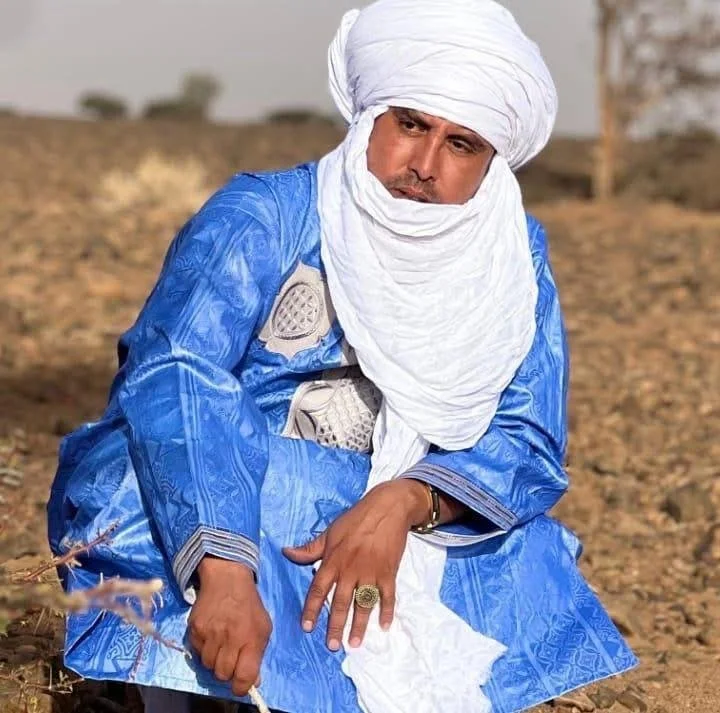
Arawan Luxury Desert Camp is the vision of Salem Bahba, an Amazigh guide with deep nomadic roots in the Sahara Desert of southeastern Morocco. Born into a nomadic family and raised moving across the desert landscapes near M'Hamid El Ghizlane and Erg Lihoudi, Salem has spent over 20 years guiding travelers through Morocco's Sahara - but always dreamed of creating something different.
After two decades of leading desert tours for larger companies, Salem saw what was missing: genuine connection. Most Sahara desert tourism rushes groups through scripted experiences, offering little time to truly understand the desert or the local Amazigh communities who call it home. Salem envisioned a space where travelers could slow down in small group settings, and connect meaningfully with both the Sahara landscape and the nomadic culture that has thrived in Erg Lihoudi for generations.
At Arawan Luxury Desert Camp near M'Hamid El Ghizlane, Salem brings his lifetime of desert knowledge - the skills passed down through nomadic Amazigh tradition, his expertise in navigation, survival, traditional music, Moroccan cooking, and storytelling - to create authentic Sahara experiences that honor both the guest and the environment. Whether you're seeking adventure in the dunes of Erg Lihoudi, cultural immersion with local Amazigh guides, or simply the profound quiet of Morocco's Sahara Desert, each experience at Arawan is crafted with intention.
This isn't just a luxury desert camp Morocco. It's Salem sharing his home in south eastern Morocco, his Amazigh culture, and his deep respect for the desert that shaped him - creating the meaningful experiences he always wished he could offer travelers seeking authentic alternatives to mass tourism.
Courtesy of Journeys and Zen Morocco
A Personal Welcome from Salem
Marhaba - Welcome to Arawan.
I'm Salem Bahba, and I built this camp with my own hands in the dunes of Erg Lihoudi. After spending my life in the Sahara, I wanted to create a place where I could share the desert the way my Amazigh ancestors taught me - with time, intention, and genuine hospitality.
When you arrive at Arawan, you're not checking into a hotel. You're coming home to the desert with me.
Let me show you around.
In this short tour, I'll walk you through our gathering spaces, introduce you to Rmyla (our camp cat who adopted us), show you where we share stories around the fire, and take you inside the luxury tent accommodations I designed for your comfort. Every detail here was built to help you slow down and experience the Sahara the way it's meant to be experienced.
This is my home in the desert. And I can't wait to welcome you here.
— Salem Bahba, Owner & Amazigh Guide
Arawan Luxury Desert Camp, Erg Lihoudi
Questions for Salem
Most travel FAQs tell you where to go and what to pack. This one is different. These are questions for Salem — about who he is, where he comes from, and what he wants you to understand about the Sahara and the Amazigh people who have called it home for generations. We share this not just to answer your questions, but because we believe the world gets a little better every time a genuine human connection is made across cultures.
-
I speak Arabic, Darija, French, Italian, English, Spanish, Tamazight and pieces of many other languages. I never learned any of this in a classroom. Every language I speak, I learned by listening. From travelers who came to the Sahara from all over the world, from music, from online conversations, from paying attention. I have always believed that if someone takes the time to travel all the way to the Moroccan desert, the least I can do is try to meet them in their own language. Language is not just words. It is how you make someone feel welcome. When I can speak to you - even just a few words in a language you understand, you relax. And when you relax in the desert, the desert opens up to you. And don’t worry, I will also share words in my local languages with you.
-
Erg Lihoudi means 'the Jewish dunes.' The name comes from the Jewish communities who were historically part of life in this region of southeastern Morocco, near the Draa Valley and M'Hamid El Ghizlane. It is not a place you will find on most travel lists. There is very little written about it. That is exactly why I chose it. The dunes here are beautiful — white river sand from the nearby Draa, rising up to 100 meters, with a quiet that is harder to find at Merzouga now. Erg Lihoudi is also more accessible than Erg Chigaga, which requires serious off-road travel. Here, you arrive more easily — and then the desert does its work. You do not need to earn the desert by enduring a difficult journey. You just need to arrive and be still. Showcasing the unique and real parts of Morocco has always been extremely important to me.
-
Amazigh means 'free people.' It is what my ancestors called themselves across North Africa long before any outside name was given to us. You will hear the word 'Berber' used often — by travel companies, by guides, even sometimes by me — because it became so common over centuries that it is woven into everyday language. But the origin of that word is not a kind one. It shares a root with 'barbarian.' It was never our name. It was a name given to us that said we were less than. Language changes slowly, even when we know better, and I am part of that process too. What I want visitors to understand is that when you come to Arawan, you are experiencing Amazigh culture — the music, the hospitality, the way we read the desert — passed down through generations of people who are still here, still free. That is the name that belongs to us. This is the culture I want to share with you.
-
My favorite food is tagine — a slow-cooked stew named for the clay pot it's made in. Chicken, beef, lamb — with onions, potatoes, whatever vegetables are ready that day. (And of course it can be made with just vegetables too.) Simple, slow, and made with good ingredients. In the Sahara, a meal is never just food. When you invite someone to eat with you, you are telling them they are safe, they are welcome, they belong at your fire. That is Amazigh hospitality — it is not a concept, it is something you do.
At Arawan, everything we cook comes from local markets in Tagounite. We buy what is fresh, what is in season, what the land is offering that week. You will never eat something that traveled further than the people around the table. When you sit down to a tagine in the desert after a day in the dunes, with the fire going and the stars coming out — that is the meal I want every guest to remember. Not because it is complicated. Because it is real.
-
What you see me wearing is a gandora or djellaba — a long, loose robe that has been worn in this region for centuries — and a turban. This is how I dress in my daily life. It is not a costume for guests or a performance of culture. It is simply what I wear, because it is practical in the desert and it is mine. The loose fabric breathes in the heat, the turban protects from sun and wind and sand. My ancestors understood the desert, and the way we dress reflects that.
When I travel to Marrakech or a city, sometimes I wear western clothes. The desert has its own dress code — not rules, just wisdom.
For guests, I want you to be comfortable above everything else. There is no strict requirement. But loose clothing and layers will serve you better than anything else in the Sahara. The sun is strong, the nights cool quickly, and the sand gets everywhere. Covering up is simply good sense — for the sun, for the wind, and out of natural respect for the culture and communities you are moving through.
Dress in a way that lets you be present and comfortable. That is all I ask.
-
Most people arrive not knowing what to expect. The desert is not like anything you have experienced. It is bigger than you imagine. It is quieter than you imagine. And it asks something of you that is different from any other place — it asks you to slow down. At Arawan, I designed the luxury tents with en-suite bathrooms because I want you to have a space where you feel safe and comfortable while you process what the desert is showing you. The tent is your familiar space. The dunes are where the real experience happens. We build in activities and guided experiences, but we also protect your time to simply sit and listen to the silence. Some people can only stay one night — and that is okay. I always encourage guests to give themselves at least two nights or more. The desert cannot be controlled or rushed. On the second morning, something shifts. You stop looking and you start seeing. Once you have lived this - you’ll know what I mean.
Contact us
Interested in more information? Want to join our newsletters for updates, special events, and sales? Send in the contact form and we will be in touch.
Courtesy of https://checkinaway.com/